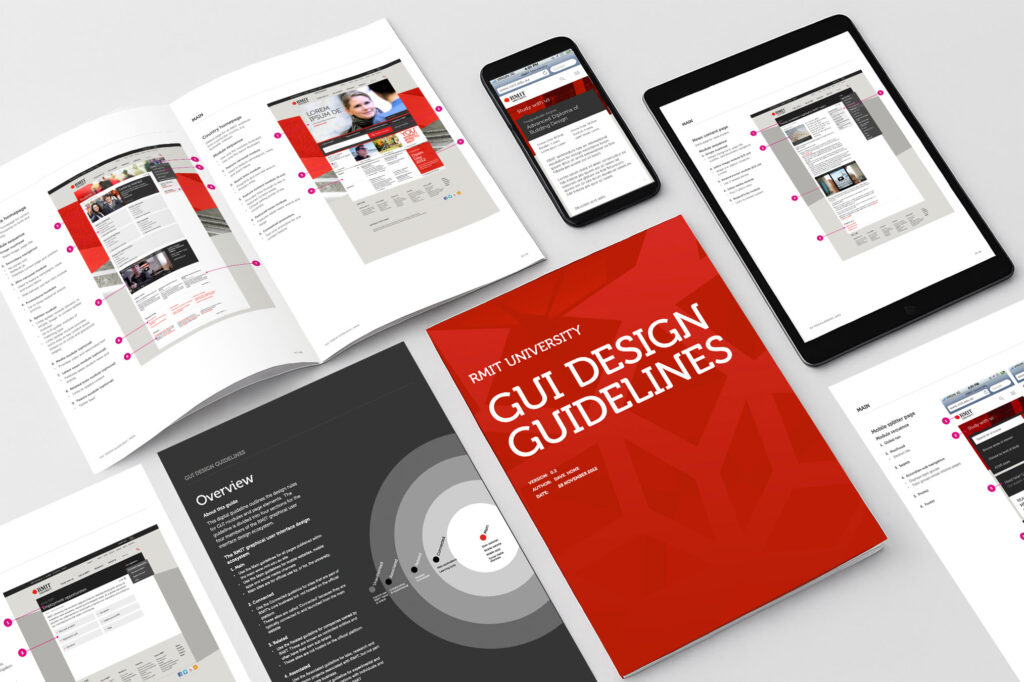
RMIT’s public website supported a huge range of services, from course discovery and new student acquisition to current student front doors for support and services. The existing interface was fragmented, inconsistent, and difficult to maintain. To deliver a sustainable uplift, I needed to:
Build a deep understanding of the breadth of services across the university
Lead design across organisational silos to gain buy‑in on a shared look and feel
Construct a new design system compatible with legacy CMS constraints
Translate photography and print‑brand elements for digital‑readiness
Work I completed
I joined the project as Senior UX Designer, responsible for shaping the user experience and ensuring the new design language could be implemented within RMIT’s ageing CMS. My work included:
Extend the UI/UX design system
Retrofit the agency-provided visual designs for compatibility with legacy CMS, and evolving brand and content and UX requirements
Redesign the navigation, visual design, page grids, interface patterns, brand images, and proposed information architecture to match the legacy content feed
Test the new information architecture, new navigation, and new interface patterns.
Assist content migration
Cross-functional stakeholder engagement across multiple organisational silos
Influence work without authority, enabling different ways of working with a unified look and feel
Design dozens of new content templates and new UI patterns that match real world context
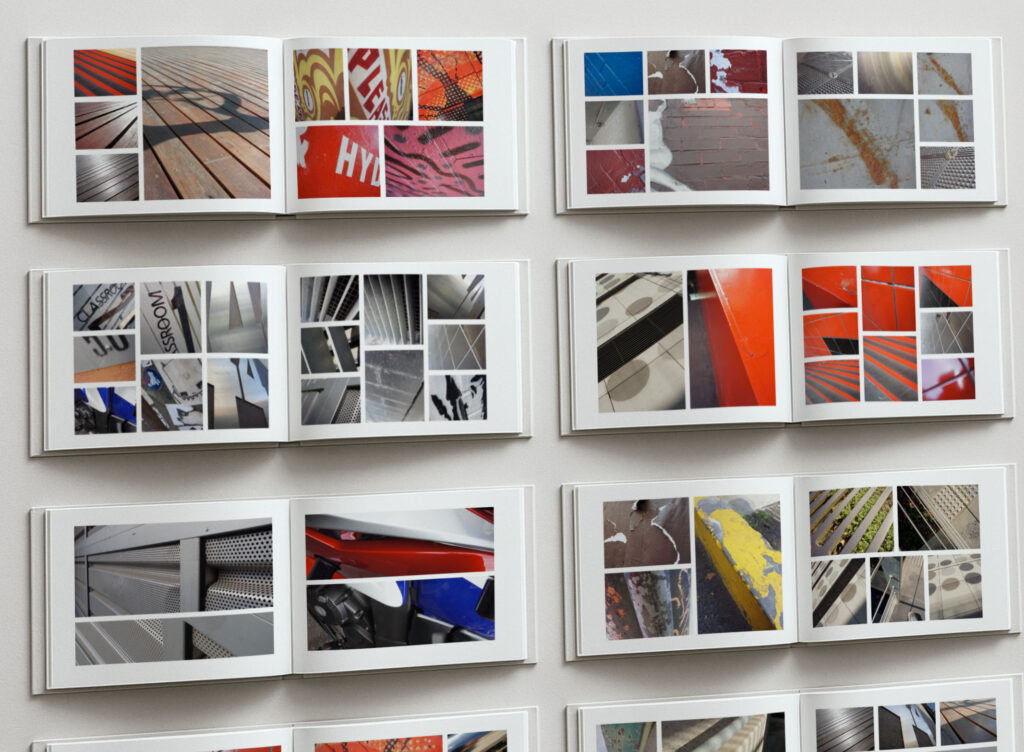
Photography for use across the site for brand and content purposes
Design sub-brand applications for campaign sites, schools, and RMIT International.
Improve accessibility
Interview students living with a disability to test the new design with assistive tools
Test intuitiveness of key journeys with English-second-language international students
Test cognitive load of complex tasks using course information.
By photographing everyday textures and surfaces I found around campus, I built a flexible image library that could scale across brand backgrounds and video stills.
Results
The project delivered a more consistent, accessible, and maintainable digital experience for RMIT. It also laid the groundwork for stronger digital governance and a more unified brand presence.
I had an excellent foundation from external agencies Symplicit, U1 and Reactive taking on the initial visual design and journeys, our internal leadership team driving organisational change along a bumpy road, and our long-suffering digital content team. Together we delivered:
Successful testing and rollout of a my redesigned navigation and content structure
Collaboration with content teams across the university to rebuild hundreds of pages
Close partnership with engineering to transform legacy CMS outputs with CSS and JS
The RMIT site relaunch in 2013, establishing a modernised foundation for future digital work.